 FirstLineCoach
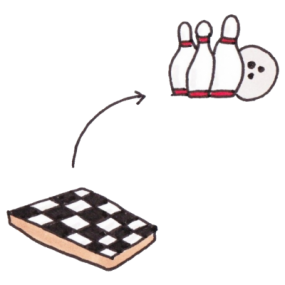
Helping difficult customers similarly to liked ones
Diagnosis
The agent enters calls predisposed against certain customers and, when triggered, closes down problem-solving rather than maintaining a professional, curious stance.
Session objective
The objective of the session is to help the agent recognise that a pre-formed dislike of a customer is driving her behaviour on the call and limiting her ability to resolve the issue. Help the agent connect the professional actions she naturally takes with customers she likes to the same actions she could take with customers she finds difficult. Get the coachee to begin thinking of handling difficult customers as a professional skill — something that can be developed — rather than a fixed personal reaction.
Session tactics
Before playing the call, acknowledge openly that it is normal to like some people and not others, and that the agent's pre-session disclosure is accepted without judgement — but frame the session around whether that feeling has to drive her actions. When the agent struggles to retell the call from the customer's point of view, do not press further on that customer; instead, ask her to recall a recent customer she genuinely liked and to describe how that customer might have presented the same problem. Ask the agent directly whether she could have helped the difficult customer if he had approached her the way the liked customer would have. Use that comparison to surface the question of professional role: ask who the professional is in the interaction, and what being professional requires when someone gets her back up. Introduce a curiosity stance as a concrete alternative — suggest that when her knowledge tells her something is impossible, she treat the customer's claim as surprising and worth exploring rather than something to contradict.
Behaviour observations
- The agent enters the session having already decided she does not like the customer, and this predisposition shapes how she handles the call before it is even reviewed.
- When the customer challenges her explanation, the agent escalates to closing the complaint and transferring rather than continuing to explore the issue.
- The agent finds it very difficult to retell the customer's experience from the customer's point of view.
- The agent acknowledges that when someone gets her back up she finds it very hard to work with them, framing this as a fixed personal trait rather than something she can influence.
Experiments
- When on a call with a customer the agent finds difficult, adopt a stance of curiosity — treat unexpected or unlikely claims as surprising rather than impossible, and explore them rather than closing them down.
- Begin to identify personal strategies for maintaining the same helpful, engaged approach with customers she dislikes as she naturally brings to customers she likes — to be continued and developed in future sessions.